


On June 22, 2026, Sakana AI announced Sakana Fugu, and the news spread fast on Reddit. Maybe too fast, with headlines already distorting reality. Here’s what we actually know, and what needs to be kept in perspective.
Sakana Fugu: an orchestrator, not a model
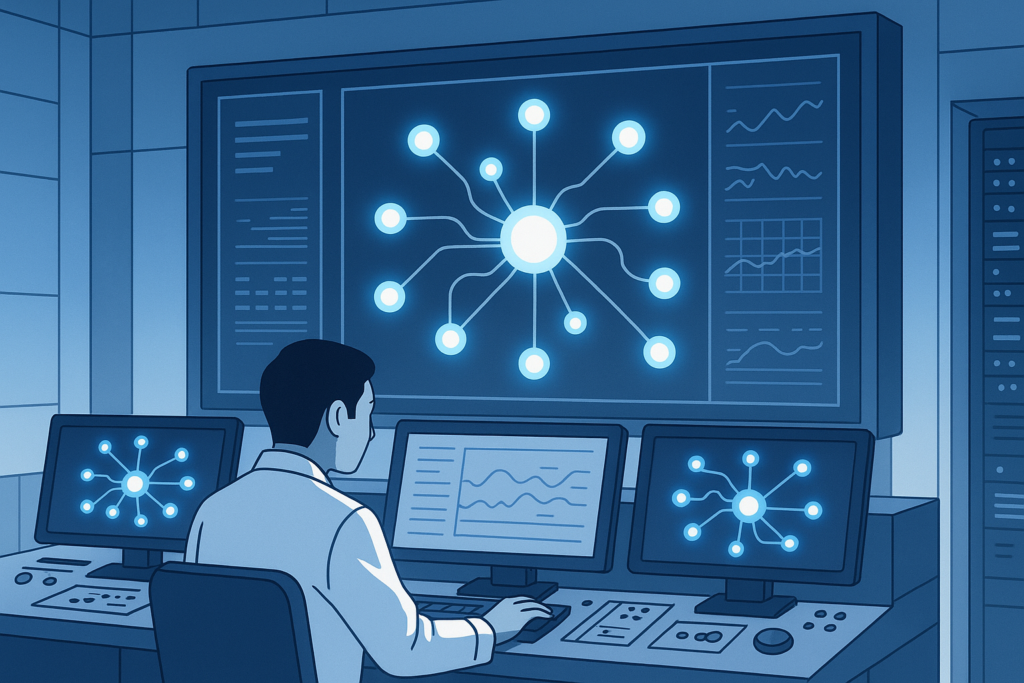
This is the key point, and it gets missed in most of the headlines making the rounds. Sakana Fugu is not a large language model trained from scratch. It’s a multi-agent orchestration system. The user sends a request to a single API, and Fugu decides behind the scenes which third-party models to call for each sub-task.
That distinction isn’t cosmetic. It changes the entire nature of the value proposition. Sakana AI isn’t chasing the monolithic frontier model race. The lab is betting on intelligent coordination of existing models.
This architecture is both lighter to maintain and more dependent on the models it orchestrates. If third-party models regress or change their access terms, Fugu feels that directly.
What Fugu Ultra claims
The high-performance variant, Fugu Ultra, posts scores presented as comparable to the best current models on engineering, science, and reasoning benchmarks. The reference names cited in Reddit discussions are “Fable” and “Mythos”, likely current frontier models.
To be honest: these claims aren’t verifiable at this stage. No official technical documentation, no research paper, no detailed blog post from Sakana AI had been published at the time of writing. The claimed benchmarks come from the company’s own communications via X/Twitter.
That doesn’t mean the performance numbers are wrong. It means independent validation is needed before drawing any conclusions.
Fast adoption in the dev ecosystem
What’s notable is the speed of integration into development tools. On launch day itself, a pull request was opened on the anomalyco/models.dev repository to add Fugu and Fugu Ultra to OpenCode, a CLI development assistance tool.
That’s a concrete signal. Developers using vibe coding tools or code assistance will be able to test Fugu quickly in their workflow. That’s often where real evaluations emerge, well before academic papers do.
The community signal is also worth reading. Reddit scores around 37 to 38 across various subreddits indicate steady, broad distribution without a viral spike but with solid reach. This isn’t hollow buzz.
Where the community got it right
A post on r/vibecodingitalia played a fact-checking role from day one. Users flagged that headlines circulating on social media were presenting Fugu as a model that “beats” its competitors, which is inaccurate. That spontaneous correction in a community dedicated to vibe coding is a good sign of maturity.
That’s the kind of signal worth appreciating. The community isn’t getting swept up in the “Japanese lab going head-to-head with American giants” narrative, even though that framing is actively used in several headlines.
What we still don’t know
The unknowns are worth naming clearly:
- Which third-party models does Fugu actually orchestrate?
- What are the pricing and access terms?
- What are the known limitations of the architecture?
- Have the claimed benchmarks been independently verified?
- Nobody in the day-one discussions confirmed having actually tested the product.
Access appears to still be limited at the time of the announcement. Questions like “has anyone tried Fugu Ultra?” dominating Reddit threads confirm that real-world feedback is absent for now.
Why this architecture is technically interesting
The orchestrator approach deserves genuine attention, independent of the claimed performance numbers. It raises a fundamental question: do you actually need to train a larger monolithic model to get better results on complex tasks?
Sakana AI, which grew out of Google Brain and specializes in evolutionary AI, answers no. Coordinating specialized models can compete with a massive generalist model, at least on certain types of tasks. That’s a serious architectural hypothesis, even if it isn’t new in AI research.
On multi-step engineering or reasoning tasks, decomposing problems into sub-tasks handled by specialized models could theoretically produce better results than a single call to a large generalist model. The empirical verification still needs to happen.
Key takeaways
- Sakana Fugu is a multi-agent orchestrator, not a new LLM. The confusion in the media is real, and some headlines are actively feeding it.
- Fugu Ultra claims strong performance on hard benchmarks, but those claims haven’t been independently verified yet.
- Fast integration into tools like OpenCode suggests potentially rapid real-world adoption.
- There are plenty of open questions: which third-party models are used, pricing, limitations, no confirmed real user tests.
- Worth watching closely when official technical documentation and the first independent benchmarks appear.
If you’re tracking the evolution of agentic AI or orchestration architectures in your DevSecOps projects, this is one to keep on your radar. Feel free to share your experience if you get early access to Fugu Ultra, or follow the blog for future analysis.
Sources
https://www.reddit.com/r/aicuriosity/comments/1ucaqoy/sakana_fugu_multi_agent_orchestration_model_from/
https://www.reddit.com/r/vibecodingitalia/comments/1ucjosm/sakana_fugu_i_giapponesi_non_hanno_fatto_un/
https://www.reddit.com/r/opencodeCLI/comments/1uchxq7/sakana_ai_fugu_fugu_ultra_models_coming_soon_to/
https://www.reddit.com/r/vibecoding/comments/1ucegvs/has_anyone_tried_sakana_fugu_ultra_yet/
https://www.reddit.com/r/VibeCodeDevs/comments/1ucmn27/when_sakana_fugu_comes/
https://www.reddit.com/r/AITrailblazers/comments/1ucmvn5/sakana_fugu_to_the_rescue_a_japanese_ai_lab_built/
http://nitter.net/SakanaAILabs/status/2068861630327443966
http://nitter.net/SakanaAILabs/status/2068862070062485867